
A debtor’s silence is a reason to change your approach, not let an overdue account drift. If a commercial debtor is dodging phone calls, the next steps in NZ are to record your contact attempts, put the payment request in writing and set a clear response date. If the debt remains unpaid, court action may be an option, but a judgment is not enforced automatically.
You can be firm without turning a business relationship into a confrontation. A missed call may signal cashflow pressure, an invoice dispute or avoidance. A calm, consistent process can help establish what is happening and guide your next move.
This article explains how to communicate in writing, manage overdue receivables and consider a formal demand or court action in New Zealand. It also covers how a regular reminder process can address late payments earlier, before silence becomes a larger account-management problem.
Key Takeaways
- Record contact attempts and move payment requests into clear, written communication.
- Find out whether silence points to a cashflow problem, an invoice dispute or avoidance before choosing your response.
- Use a consistent reminder process to manage overdue accounts and spot problems earlier.
- A court can help determine a civil debt, but you need to manage the next steps because a judgment is not enforced automatically.
- Check what a collection letter says about the debt and who is entitled to payment, especially if the debt has been sold.
Court assistance with collecting civil debt
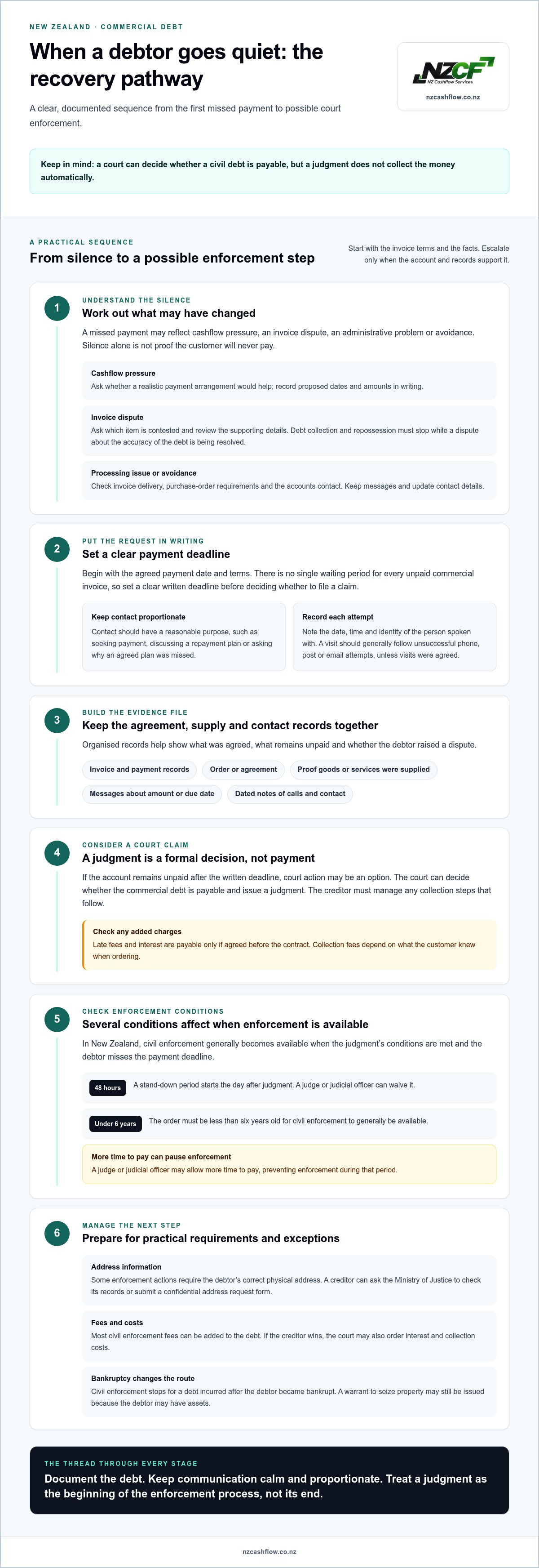
A court can decide whether a commercial debt is payable and issue a judgment, but it will not collect the money automatically. Organise the claim, communications and any later enforcement records from the outset.
Court collection assistance
Court collection assistance means using the court to obtain a decision on a civil debt and, if necessary, seek enforcement of the judgment. A judgment provides a formal route forward, not automatic payment.
In New Zealand, civil enforcement generally becomes available after the judgment’s conditions are met, the debtor misses the payment deadline, and the order is less than six years old. A judge or judicial officer may allow more time to pay, preventing enforcement during that period. A 48-hour stand-down period starts the day after the judgment, although a judge or judicial officer can waive it.
The creditor must manage collection after judgment. Some enforcement actions require the debtor’s correct physical address. A creditor can ask the Ministry of Justice to check its records or submit a confidential address request form. Most civil enforcement fees can be added to the debt. If the creditor wins, the court may also order interest and collection costs.
Pre-action timing and invoice evidence
There is no single waiting period for every unpaid commercial invoice. Start with the agreed payment date and terms, then set a clear written deadline before deciding whether to file a claim.
To support recovery, organise the invoice, relevant order or agreement, proof that the goods or services were supplied, payment records and messages about the amount or due date. Keep dated notes of every contact, including calls. These records help show what was agreed, what remains unpaid and whether the debtor raised a dispute.
Keep contact proportionate. Debt collectors should contact a debtor for a reasonable purpose, such as seeking payment, setting up or reviewing a repayment plan, or asking why an agreed plan was missed. A visit should generally follow unsuccessful attempts by phone, post or email, unless the debtor agreed to visits.
Record collection calls in a spreadsheet or client-file note, including the date, time and identity of the person you spoke with. Written records make the contact history easier to review and help establish what happened.
You can assign recovery to a collection agency or sell the debt to it. If the agency buys the debt, it becomes the creditor and has the same recovery options. Before sending payment instructions, establish who owns the debt and who is responsible for communication.
Bankruptcy changes the available enforcement route. Civil enforcement stops for a debt incurred after the debtor became bankrupt, although a warrant to seize property may still be issued because the debtor may have assets.
Reasons debtor payments may stop
A missed payment may signal cashflow pressure, a genuine invoice dispute or deliberate avoidance. Treat silence as a prompt to find out what has changed, not proof that the customer will never pay. For example, compare the unpaid invoice with recent payment patterns, order records and messages about the work. For NZ businesses deciding what to do when a commercial debtor is dodging phone calls, identifying the cause helps guide the response.
Cashflow pressure can interrupt payments even when a business intends to settle its account. A customer may be waiting on its own invoices, managing unexpected costs or prioritising wages and essential suppliers. Ask whether a realistic payment arrangement would help, and record proposed dates and amounts in writing. A clear response gives you a basis for deciding whether to allow more time or escalate collection.
An invoice dispute calls for a different response from simple non-payment. The customer may challenge the quantity supplied, quality of work, delivery date or agreed price. Ask them to identify the disputed item and explain their position with supporting details. In New Zealand, debt collection and repossession must stop while a dispute about the accuracy of the debt is being resolved. Separate any undisputed amount from the contested part, and keep the relevant order, delivery record and correspondence together.
Administrative problems can also explain silence. An invoice may have gone to an old email address, missed a purchase-order requirement or reached the wrong accounts contact. Check the invoice recipient, customer’s purchase order and agreed payment instructions. For example, if the debtor says the invoice cannot be processed without a reference number, confirm the reference, resend the corrected invoice and note when it was sent.
Some customers avoid contact because they cannot pay, have closed or changed their business, or hope the creditor will stop following up. Look for concrete signs, such as returned mail, a disconnected phone number or repeated promises without payment. Update your contact records and preserve written messages. A new contact person does not mean the original debt has disappeared. Establish who placed the order and which business name appears on the agreement.
Contract terms can affect what a debtor owes beyond the invoice principal. In New Zealand, late fees and interest on an overdue account are payable only if the debtor agreed to them before entering the contract. Collection fees also depend on what the customer knew when ordering. Check the signed terms and order records before adding charges. An unexplained extra amount can turn a delayed payment into a dispute.
Classify the reason before choosing your next move. The right next steps for a commercial debtor dodging phone calls in NZ depend on whether the account is disputed, delayed or simply unanswered:
- Cashflow strain: ask for a workable payment proposal and document it.
- Invoice dispute: identify the contested amount and review evidence.
- Processing delay: correct missing details and resend the invoice.
- Avoidance or business change: update contact details and retain a clear record.
Communicating with debtors
Make each contact clear, measured and easy to record. If a business debtor is dodging calls, send a written message identifying the invoice, stating the amount you believe remains unpaid and requesting a response by a clear date. Keep the tone professional. A direct message gives the debtor a practical way to explain a problem or propose payment.
For example, write: “Invoice 418 for the supplied parts remains unpaid. Please confirm payment timing or explain any issue with the invoice.” Avoid repeated calls that add no new information. Instead, set out the next contact method and keep a record of when you sent the message. Consistency helps distinguish a genuine conversation from a string of unanswered attempts.
Give the debtor a straightforward way to raise a dispute. In New Zealand, a debtor who disputes a debt or its amount can explain the reason to the debt collector. The collector must consider the dispute and say whether it agrees. Ask for the specific concern and supporting details, such as a delivery discrepancy or a different agreed price. Address each point instead of sending another standard payment demand.
If the debtor disputes the accuracy of the debt, debt collection and repossession must stop while the dispute is being resolved. Keep the disputed invoice and relevant records together, then address the issue directly. For example, compare the order with the delivery record if the customer says some goods never arrived. This keeps communication focused on resolving the difference, rather than repeating that payment is overdue.
Contact must have a reasonable purpose. Debt collectors should contact a debtor to seek payment, set up or review a repayment plan, or ask why an agreed plan was missed. A collector should generally consider a visit only after contact by phone, post or email has failed, unless the debtor agreed to in-person visits. Keep collection activity focused on the account and reason for contact.
Use a simple structure for each written message:
- Identify the account: name the invoice, supply or service and amount claimed.
- State the issue: explain whether payment is overdue or a specific concern needs an answer.
- Request a response: ask for payment timing, a dispute explanation or a proposed plan.
- Record the exchange: save the message and note any reply or agreed action.
Terms of Trade can set expectations about payment and how a business should raise account concerns. Use the terms agreed with the customer to keep later messages consistent, and do not add charges the agreement does not support.
Managing accounts receivable
A regular reminder routine keeps overdue invoices visible before unanswered calls become the focus. For each account, record the due date, amount, contact person and last action in your receivables system. That record helps staff follow the same process, even when someone else handles the next reminder.
A practical schedule is to send an invoice reminder 1 day before the due date, then 7 days and 14 days after it. The first message can confirm the amount and payment instructions. Later reminders should identify the invoice, say it is overdue and ask the customer to pay or explain any issue. Use the same account record to note each message and response.
Review overdue accounts regularly rather than waiting for a debtor to stop answering calls. Group invoices by due date and flag disputed amounts separately from accounts with no response. A quarterly review of your collection strategy and tools can reveal recurring delays, unclear invoice details or customers who need a different payment arrangement.
Make the process easy to follow. Send invoices to the agreed accounts contact, include the purchase-order reference where required and state the due date clearly. If a customer says an invoice is missing, resend it and log the date. If they ask to pay by instalments, record the proposed amounts and dates, then track whether each payment arrives.
A Letter of Demand is a formal way to seek payment of an overdue debt. It should clearly state the outstanding account and the action requested. If informal reminders and calls have failed, consider whether a debt-collection agency is appropriate for the account. Keep the invoice and earlier contact records organised so the agency can understand the history.
Can a New Zealand business charge debt collection costs, interest or late fees on an overdue invoice? Late fees and interest are payable only if the debtor agreed to them before entering the contract. Collection costs can be passed on only if the debtor knew about them when ordering the goods or services. Undisclosed collection costs can breach the Fair Trading Act.
Apply charges consistently with the terms agreed before the sale. For example, do not add interest to an invoice if the customer did not agree to it in advance. The Fair Trading Act also matters when a trader instructs collectors: collection costs not disclosed when goods or services were requested must not be demanded, unless the trader explicitly instructed collectors not to demand those costs.
Set a clear point for reviewing uneconomic accounts. One example is writing off debts under NZ$200 after three genuine contact attempts. Treat that as a policy choice, not an automatic rule. Compare the likely recovery with staff time, account age and contact history before deciding whether to continue collection.
What information must a New Zealand debt collection letter include?
For a commercial invoice, a clear collection letter should identify the account and explain the action requested. Include the invoice reference, goods or services supplied, amount claimed, original due date and a way to respond. These details help the business match the demand to its records and raise a specific issue if it disputes the claim.
Keep the letter consistent with the order and agreed terms. If the invoice includes interest or late fees, explain the contractual basis. In New Zealand, those charges are payable only if the debtor agreed to them before entering the contract. Do not present an added charge as part of the original invoice if it was not agreed beforehand.
If a customer disputes the debt or its amount, ask them to explain why and provide relevant details. A debt collector must consider the dispute and say whether it agrees. Debt collection must stop while a dispute about the accuracy of the debt is being resolved. Keep the letter, invoice, order and any response together so you can address the issue using the underlying records.
Check who is entitled to receive payment before following instructions in a collection letter. A creditor may have sold the debt, making the debt collector the new creditor. For a debt the debtor accepts, payment instructions should make clear who is owed and where payment should go. If the letter names a different creditor, compare that information with the original account before paying.
For a lender that sells a debt, New Zealand rules require a letter identifying the new lender, including its registration number and dispute scheme, within 10 working days. This requirement applies to the lender’s notice of the sale. It gives the debtor key information about the new lender and where to raise a concern.
A useful letter should make these points easy to find:
- Account details: creditor, debtor, invoice reference and supplied goods or services.
- Amount claimed: separate the original debt from any agreed interest or fees.
- Payment or response: give clear instructions and invite the debtor to explain a dispute.
- Change of creditor: identify the new lender and include its registration number and dispute scheme when required.
Keep a copy of every letter and note when it was sent. A dated record helps connect the demand to earlier reminders and any reply. For practical help organising overdue-account communications, get support with overdue accounts.
NZ Cashflow Services: PPSR
NZ Cashflow Services helps New Zealand businesses manage payment risk through PPSR and credit-management support. If you supply goods on credit, PPSR registration can record a security interest where your business has one to register. The service also covers amendments, renewals and discharges, helping keep security-interest records aligned with changes to an account or arrangement.
For overdue invoices, Get Paid and Credit Management support practical receivables processes. Terms of Trade can set out payment expectations before a customer places an order, helping clarify obligations from the outset. These services support different stages of the credit cycle: setting terms, recording security interests and responding to unpaid accounts.
Visit nzcashflow.co.nz to discuss your business’s payment and credit-management needs.
Build a steadier path to payment
Use a stalled account as a prompt to strengthen how your business handles credit, not just as a reason to chase one debtor. Clear trading terms and consistent follow-up can help set expectations before the next invoice falls overdue. If you are considering the next steps for a commercial debtor dodging phone calls in NZ, focus on a process your team can apply consistently, from approving credit to managing overdue accounts.
NZ Cashflow Services offers Terms of Trade, Get Paid and PPSR support for businesses looking to protect receivables and manage payment risk. Choose support that matches the issue at hand, whether you are setting expectations with customers, dealing with unpaid accounts or recording a security interest.
Take the next step at a pace that suits your business. Contact NZ Cashflow Services to discuss practical support for your receivables. A clear process gives your team a stronger footing for the next customer conversation.
Frequently Asked Questions
What steps should a New Zealand business take when a commercial debtor ignores phone calls?
Move to written contact that names the invoice, explains the amount claimed and requests a clear response. Check the customer’s accounts contact and delivery records before assuming they are deliberately avoiding payment. If they raise an issue, separate the disputed part from any amount they accept. Keep dated records of replies and agreed actions, then decide whether to offer a workable payment plan or move towards formal recovery.
How should a creditor send a formal letter of demand in New Zealand?
Send a dated letter to the debtor’s correct legal business name and address. Identify the invoice, goods or services, amount claimed and payment deadline. Explain how the debtor can pay or respond, and include interest or collection costs only where the contract supports them. Keep a copy and evidence of delivery. A clear letter helps the debtor identify the account and gives both businesses a written record of the demand.
What are the current New Zealand Disputes Tribunal and District Court limits for commercial debt claims?
A debt claim may go to the Disputes Tribunal if it is no more than NZ$30,000 and the complaint has first gone through a financial dispute resolution scheme without resolution. That pathway is conditional, so don’t assume it covers every unpaid business invoice. The District Court’s monetary jurisdiction depends on the applicable court rules and claim type. Confirm the current limit for your claim before filing.
How much does it cost to file a commercial debt claim in the New Zealand Disputes Tribunal or District Court?
Filing costs depend on the court route and the step being taken, such as starting a claim or seeking enforcement. The claim amount alone does not determine every cost. Most civil enforcement fees can be added to the debt, and a court may order interest and collection costs if the creditor wins. Consider filing and enforcement costs alongside the evidence and time needed to pursue payment.
When should a New Zealand creditor use a debt collection agency or lawyer, and what do they cost?
Consider an agency when direct reminders have failed and the account is supported by clear records. Seek legal advice where the debtor disputes liability, the contract is complex or court proceedings are being considered. Agency arrangements vary: some debt collectors may charge commission as high as 30 percent of the total debt. Whether those costs can be passed to the debtor depends on the contract and what the debtor knew when ordering.
What are the risks of continuing to contact a debtor or using a debt collector in New Zealand?
Repeated contact without a reasonable collection purpose can lead to complaints and harm a business relationship. Keep calls and letters focused on payment, a repayment plan or an explanation for missed instalments. A collector should generally visit only after phone, post and email contact have failed, unless the debtor agreed to visits. If the debtor disputes the accuracy of the debt, collection must stop while the dispute is being resolved.
How can a New Zealand creditor enforce a court judgment against a business debtor?
A judgment is not enforced automatically, so the creditor must apply for an appropriate civil enforcement step. The judgment’s conditions must be met, the debtor must have missed the payment deadline, and the order generally needs to be less than six years old. Some enforcement actions require the debtor’s correct physical address. A judge or judicial officer may allow more time to pay, pausing enforcement during that period.
What should a creditor do if a New Zealand company debtor is insolvent or being liquidated?
First establish whether the debtor is a company in liquidation or an individual who is bankrupt, as the processes differ. Preserve the invoice, contract, delivery records and payment history, and identify who is managing the company’s affairs. Send account information through the appropriate channel and keep a copy. Civil enforcement stops for a debt incurred after an individual became bankrupt, although a warrant to seize property may still be issued.


