

A PPSR registration can help protect business assets if a customer defaults. In New Zealand, the Personal Property Securities Register records security interests in personal property, excluding land, buildings and large ships. Priority between competing interests is generally given to the party that registers first.
That makes the PPSR a practical part of managing credit and supplying goods on payment terms. This guide explains what a security interest covers, how registrations work, when they lapse and how to search for existing claims. You’ll learn what to consider before relying on a registration and how PPSR information can inform business decisions.
Key Takeaways
- Registering a security interest can strengthen your position if a customer defaults, but accurate customer and goods details matter.
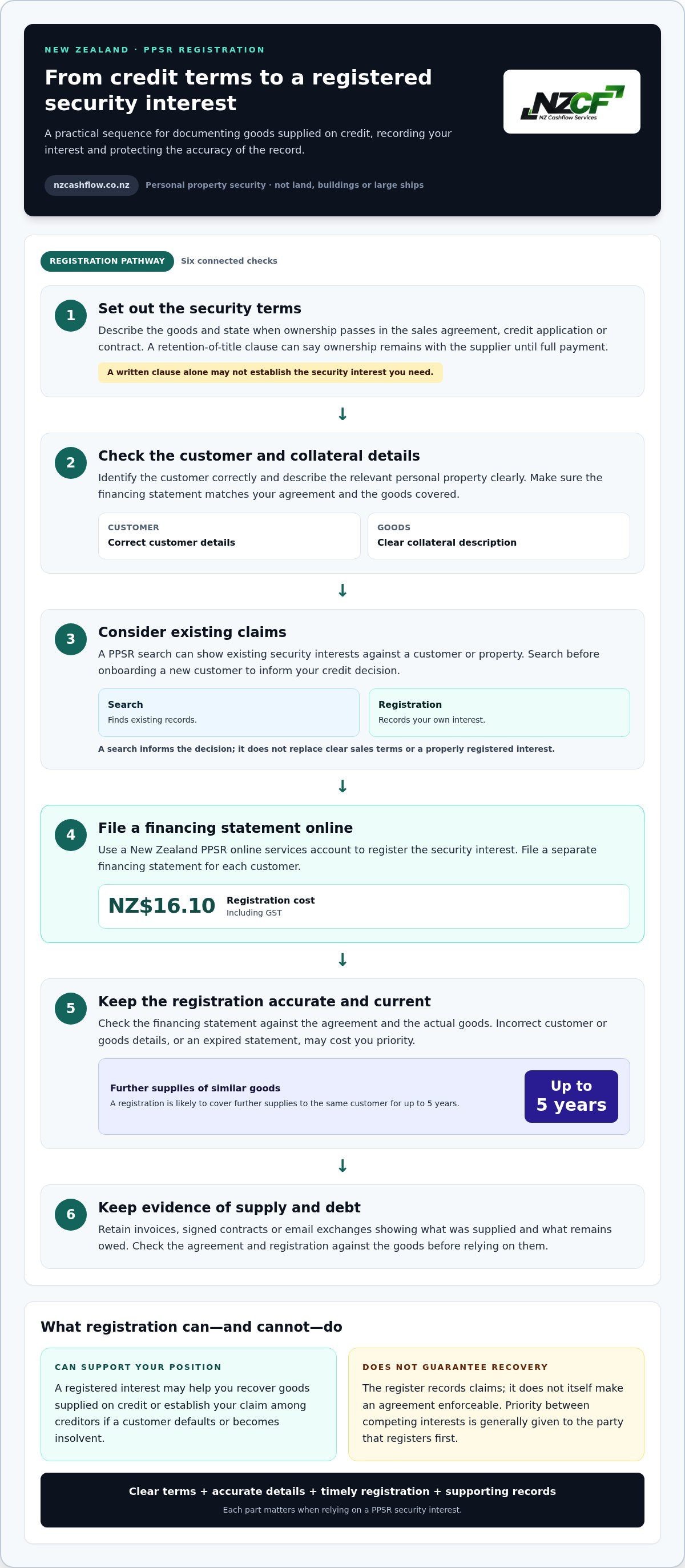
- File a separate financing statement for each customer. A registration is likely to cover further supplies of similar goods to that customer for up to 5 years.
- In New Zealand, registering a security interest costs NZ$16.10, including GST. Priority between competing interests is generally given to the party that registers first.
- Search the PPSR before buying a second-hand asset. An existing claim may affect your ability to keep the property.
- Check registrations as well as your sales terms, and keep invoices, signed contracts or email exchanges as evidence of what you’re owed.
What is the PPSR and how can it protect your assets?
New Zealand’s Personal Property Securities Register (PPSR) records and enables searches for security interests in personal property. It excludes land, buildings and large ships, and can help suppliers protect goods supplied on credit.
Protection when customers default
A security interest is a claim over personal property used as collateral. Registering it on the PPSR can improve your position if a customer defaults or becomes insolvent. This matters when goods supplied on credit remain unpaid, because a registered interest may help you recover the property or establish your claim among creditors.
The register records claims, but it doesn’t itself make an agreement enforceable or guarantee recovery. Check that your customer agreement describes the goods and creates a valid security interest. A supplier’s registered interest may also improve its position if the customer’s business fails. Priority between competing interests is generally given to the party that registers first.
Retention of title and insolvency
A retention-of-title clause says the supplier keeps ownership of supplied goods until the customer pays in full. It provides a written record of when ownership changes. This matters if a customer becomes insolvent while invoices remain unpaid, but the clause and PPSR registration work together to support the supplier’s position.
Set out the ownership terms in the sales agreement, credit application or contract. For example, state that ownership remains with you until full payment. A written clause alone may not establish the security interest you need. Get legal advice to check that your agreement creates a valid interest, then register it against the customer.
Searching before onboarding customers
A PPSR search checks whether security interests are registered against a customer or property. Search before onboarding a new customer to understand existing claims before offering credit. In New Zealand, using the register requires an online services account. Its dashboard lets you search records and manage secured party groups and financing statements.
Registering a security interest costs NZ$16.10, including GST. A search is a separate action from registration: it finds existing records, while registration records your own interest. Keep the two purposes clear when assessing a customer’s credit position. A search can inform your decision, but it doesn’t replace clear sales terms or a properly registered interest.
Recovering property after default
If a customer cannot pay, a registered security interest may help a supplier repossess goods supplied on credit. It can also help establish a claim over personal property used as collateral. The agreement should identify the goods and explain when ownership passes. Keep invoices, signed contracts or email exchanges as evidence of the supply and amount owed.
Check the registration and agreement against the actual goods before acting. Incorrect customer or goods details, or an expired financing statement, may cost you priority. A buyer may also find that a secured party’s registered interest wasn’t discharged before a purchase. Clear records help show what was supplied, what remains unpaid and which property the claim concerns.
Registering a security interest
A financing statement records a security interest on New Zealand’s Personal Property Securities Register. You need accurate customer and goods details; register a separate financing statement for each customer through an online services account.
Registering interests in business goods
A registration links the secured party’s interest to a customer and the relevant personal property. This matters when you supply goods on credit, lease equipment or hire it out, because an inaccurate record can undermine your position. Identify the customer correctly and describe the goods clearly in the financing statement.
Use the online services dashboard to manage financing statements. Check that the information matches your agreement and the goods covered. A registration is likely to cover further supplies of similar goods to the same customer for up to 5 years. The registration cost is NZ$16.10, including GST.
Priority between secured claims
Priority determines which creditor has the stronger claim when multiple security interests cover the same property. In New Zealand, the party that registers first is generally given priority. Timing matters: a supplier who registers after another secured creditor may rank behind that creditor over the relevant goods.
Correct details and an unexpired financing statement matter too. Incorrect customer or goods information, or an expired statement, may result in lost priority. For example, if a business supplies equipment on credit while a lender already has a registered interest, the supplier’s later registration may not take precedence. Check existing claims and register promptly.
Inter-entity loans and security interests
An inter-entity loan is made between separate entities within a business group. If one entity lends to another and takes personal property as security, documenting the arrangement and registering the interest can make the claim visible on the property securities register.
Keep the lender, borrower and collateral details clear in the loan documents. For example, distinguish the company advancing funds from the company granting security over its equipment. A group relationship alone doesn’t record a security interest. Consider how existing registrations affect priority, and ensure the agreement identifies the secured property and the debt.
Purchase money security interests
A purchase money security interest (PMSI) can give a supplier priority over other secured creditors for supplied goods and their sale proceeds, provided the supplier registers the interest on the PPSR. This can matter when a customer already has lending secured against its assets.
For example, a supplier selling machinery on credit may seek a PMSI over that machinery and its proceeds. Make sure the agreement supports the interest and the financing statement accurately reflects the customer and goods. Registration is essential to the stated priority benefit. Clear Terms of Trade provisions can set out payment and ownership expectations alongside the registration.
Do PPSR registrations lapse?
A PPSR registration can lose value if it expires or contains incorrect details. In New Zealand, a registration is likely to cover further supplies of similar goods to the same customer for up to 5 years. Track the registration period and review its details as your trading relationship changes.
Expiry matters because an expired financing statement may result in lost priority. Set a reminder to review registrations before their recorded expiry, then check whether the security interest still applies. If you continue supplying similar goods to the same customer, confirm the statement still reflects that arrangement. Don’t assume an old entry covers every new transaction or asset.
Timing also shapes a creditor’s position. In New Zealand, a lender’s existing PPSR registration generally takes first priority unless the lender, customer and another lender agree to a different priority position. A supplier considering credit or finance should search the relevant property first. The search can reveal registered claims that may affect which creditor has priority.
Registered claims are useful information when assessing a customer’s existing obligations, but they aren’t a credit rating. Review search results alongside the customer’s payment history, trading terms and available financial information. For example, an existing lender’s claim over business equipment could affect a supplier’s view of that equipment as security. A PPSR search identifies the claim, but doesn’t determine the customer’s ability to pay.
Keep each registration aligned with the underlying agreement. Check the customer’s details, the property covered and whether the financing statement remains current. If an entry is wrong or no longer reflects the transaction, review and amend it. New Zealand’s online PPSR account provides a dashboard to search the register and manage financing statements. Accurate records help creditors understand which assets are subject to registered interests.
The PPSR concerns personal property, not land, buildings or large ships. It records a security interest, a legal right to enforce payment under a contract, rather than establishing ownership of property. That distinction also matters for intellectual property: a PPSR entry isn’t a substitute for recording ownership with the relevant authority. Identify the right you’re protecting before choosing the register or record that applies.
For businesses managing customer credit, make registration reviews part of routine account administration. Compare PPSR records with current agreements and supplied goods, especially before extending finance against customer assets. The register can show existing interests, while accurate agreements and timely updates help keep your records clear.
Searching for existing claims before buying second-hand assets
A second-hand asset can carry a registered security interest from its previous owner. Search the New Zealand PPSR before purchase to identify existing claims that could affect your ability to keep the property. A buyer may find that a secured party’s interest wasn’t discharged before the sale. That claim can put the asset at risk, even after payment to the seller.
Start by identifying the asset you intend to buy. Match the details in the PPSR search to the item being sold, then review any registrations returned. For example, if you’re buying used business equipment, confirm the result relates to that equipment and seller. A record against different property may not be relevant, but a matching claim needs attention before money changes hands.
New Zealand’s PPSR is an online register where security interests in personal property can be searched. To use it, set up an online services account. The dashboard provides access to searches and financing statement information. A search helps reveal registered claims, but doesn’t establish that the seller owns the asset or that every possible claim appears in the results.
Read each matching registration carefully. Note which secured party has the interest and what property the record covers. If the registration is relevant, arrange for the claim to be discharged as part of the sale before completing payment. A buyer who skips this check could purchase goods that a secured party may repossess, leaving the buyer out of pocket and without the asset.
Keep a record of your search and the sale documents. Save the results alongside the invoice, contract and seller’s details. These records can help show what you searched, what the seller represented and when you paid. Make sure the sale agreement identifies the asset clearly, especially when several similar items are being sold.
Searching also helps you make a more informed purchase decision. An existing registration may relate to a lender’s security over a customer’s assets, rather than a claim specific to the item. Compare the register entry with the asset and transaction details before deciding whether to proceed. Don’t treat a clear search as a substitute for checking the sale terms and confirming that the seller can transfer the property.
Search before committing funds, not after delivery. If a claim appears, resolve its status with the seller and secured party before purchase. This order helps you avoid a dispute over ownership or repossession after the equipment is in your business.
What the PPSR records
New Zealand’s Personal Property Securities Register records security interests in personal property. A security interest is a claim over personal property used as collateral. The PPSR helps show who has registered a claim against property, giving businesses a way to check whether goods may already secure a debt or other obligation.
Personal property is property other than land, buildings and large ships. Business equipment, stock and vehicles are practical examples of assets a business may need to consider. The register records the secured party’s interest, not a general list of everything a business owns. A lender, supplier or lessor may register an interest when an agreement gives them a claim over specified property.
That distinction matters when you supply goods on credit or lend against business assets. For example, a supplier’s agreement may give it a security interest in goods until the customer pays. A lender may also register an interest over a customer’s property. Searching the PPSR can reveal those claims, helping a business understand which interests may already affect an asset.
The PPSR does not record ownership in the same way as an ownership register. It records a legal right to enforce payment under a contract, rather than establishing who owns property outright. Intellectual property is a useful example: a PPSR registration is not a substitute for recording ownership with the relevant authority. Identify whether you need to protect ownership or secure payment before deciding which records matter.
Contracts and sales documents help explain the claim behind a registration. Check the agreement alongside the PPSR entry. Compare the named parties, property description and transaction being secured. If a supplier sells equipment to a customer, the contract should make clear when ownership transfers and what payment terms apply. A registration that doesn’t match the underlying arrangement can create confusion when a claim is reviewed.
If you’re assessing an asset, use the register as part of your checks. Search the PPSR, compare any matching interest with the sale documents, then establish whether the claim has been discharged before completing payment. If you’re a supplier, keep the agreement and registration aligned as goods are supplied and debts are paid. These checks help distinguish a current secured claim from a completed transaction.
Clear records support better decisions about supply, lending and asset purchases. If you need practical help managing registrations and related records, get support with PPSR registrations.
NZ Cashflow Services: PPSR
NZ Cashflow Services helps manage PPSR registrations when you need to register, amend, renew or discharge a security interest. Accurate records matter: incorrect customer or goods details, or an expired registration, may affect your priority. Practical support can help keep the registration aligned with your trading arrangements and the property it covers.
For a broader approach, Terms of Trade can set out payment and ownership terms, while Credit Management supports the systems around customer accounts. These services work alongside PPSR processes, helping you manage the agreement, registration and ongoing credit relationship as connected parts of doing business.
Contact NZ Cashflow Services to discuss your PPSR requirements.
Make PPSR checks part of your credit process
Building a consistent process to protect business assets with the PPSR means treating registrations as part of routine credit administration, not a task left until a payment problem appears. Assign responsibility for reviewing customer agreements, keeping records aligned and setting review points as accounts change. That gives your team a clear way to manage risk before making credit decisions.
NZ Cashflow Services offers PPSR, Get Paid and Terms of Trade services to support different parts of your process. Trading terms set expectations, PPSR work deals with registrations, and Get Paid support addresses overdue accounts. Choose your next step based on the pressure point, whether you’re setting up customer terms or managing an unpaid account.
Make the process practical for your team. Decide who maintains the records, what changes trigger a review and where supporting documents are kept. Clear responsibility turns a one-off check into a dependable business habit.
For support that fits your business needs, contact NZ Cashflow Services. A considered process can help you move forward with greater confidence.
Frequently Asked Questions
What is a security interest?
A security interest is a claim over personal property used as collateral for an obligation. For example, a supplier’s agreement could give it a claim over equipment supplied to a customer on credit. The agreement sets out the arrangement between the parties, while a PPSR financing statement records the interest for searching. Check that the customer, goods and payment terms in your documents match the transaction.
What kind of property can I register?
You register a security interest in personal property, rather than registering ownership of an asset. Business equipment, stock or a vehicle can be relevant examples when an agreement gives you a claim over it. The New Zealand PPSR excludes land, buildings and large ships. Before preparing a financing statement, identify the property covered by your agreement and describe it clearly enough to distinguish it from other assets.
What else can I do to protect my business?
Build protection into your credit process before supplying goods. Set clear payment and ownership terms in contracts, assess a customer’s credit position, and keep invoices and signed agreements together. For example, if you supply materials on account, retain the order, delivery record and invoice alongside the customer’s credit documents. Review overdue accounts promptly and keep customer records current, so you can identify payment issues and respond with the relevant paperwork.
What happens if you don’t register on the PPS Register?
Without registration, your claim over goods supplied on credit, lease or hire can lose priority to a secured creditor’s registered interest. This matters if the customer defaults or becomes insolvent and several creditors claim the same property. For example, a lender with an earlier registration could rank ahead of an unregistered supplier. The practical risk is a weaker position over the goods, even if your customer agreement records the debt.
What is personal property?
Personal property is property other than land, buildings and large ships. In a business setting, it can include movable assets such as stock, vehicles and equipment. This distinction helps you identify whether an asset falls within the PPSR’s scope. For instance, machinery used in a workshop is different from the workshop building itself. Focus on the asset covered by the agreement, not everything owned or used by the business.
Why is the PPSR of benefit to me?
The PPSR gives businesses a place to record and search security interests in personal property. A registration can strengthen a supplier’s position if a customer defaults, while a search can reveal claims before you extend credit or buy an asset. For example, checking a customer’s existing registrations can inform your credit decision. Use the information alongside the customer’s trading history and payment records, rather than treating a search as a full credit assessment.
Why not just rely on a written agreement?
A written agreement explains the deal, but it doesn’t create a public record of your security interest. If your customer becomes insolvent, another creditor’s registered claim could have priority over your unregistered interest. For example, a contract may say that supplied goods remain yours until payment, yet a lender could already hold a registered claim over them. Align the agreement with a PPSR registration to make your interest visible to people searching the register.
What is the PPSR in New Zealand and how does it protect business assets?
The New Zealand PPSR is an online register for recording and searching security interests in personal property. It helps businesses make claims visible and check for existing interests before supplying goods, extending credit or buying an asset. For example, a supplier can use a financing statement to record an interest connected with a customer’s purchase. The register supports clearer decisions about property and creditor claims, but doesn’t replace accurate agreements or account records.


