

A used vehicle or piece of equipment can come with a financing question: is money still owing on it? The Personal Property Securities Register (PPSR) is New Zealand’s online register for recording and searching security interests in personal property. PPSR help in New Zealand starts with understanding what the register shows and how to use it before making a purchase or credit decision.
The PPSR serves a practical purpose: it helps businesses and buyers check for registered interests and make better-informed decisions. Search the register when considering pre-owned goods. If you are a secured party, registering an interest can help protect your position.
This guide explains what the PPSR is, why it matters and how to search for a financing statement. It also covers the information recorded on the register and how to set up an online services account. Use these steps to identify what to do next and when specialist support can help.
Key Takeaways
- Understand what the PPSR records and how security interests relate to personal property.
- Learn when a search can help you assess used goods or check registered interests.
- See the steps for setting up an online services account and accessing PPSR tools.
- Find out what information to prepare before registering a financing statement.
- Know how registration can support a secured party’s position if a customer defaults.
Searching for a financing statement
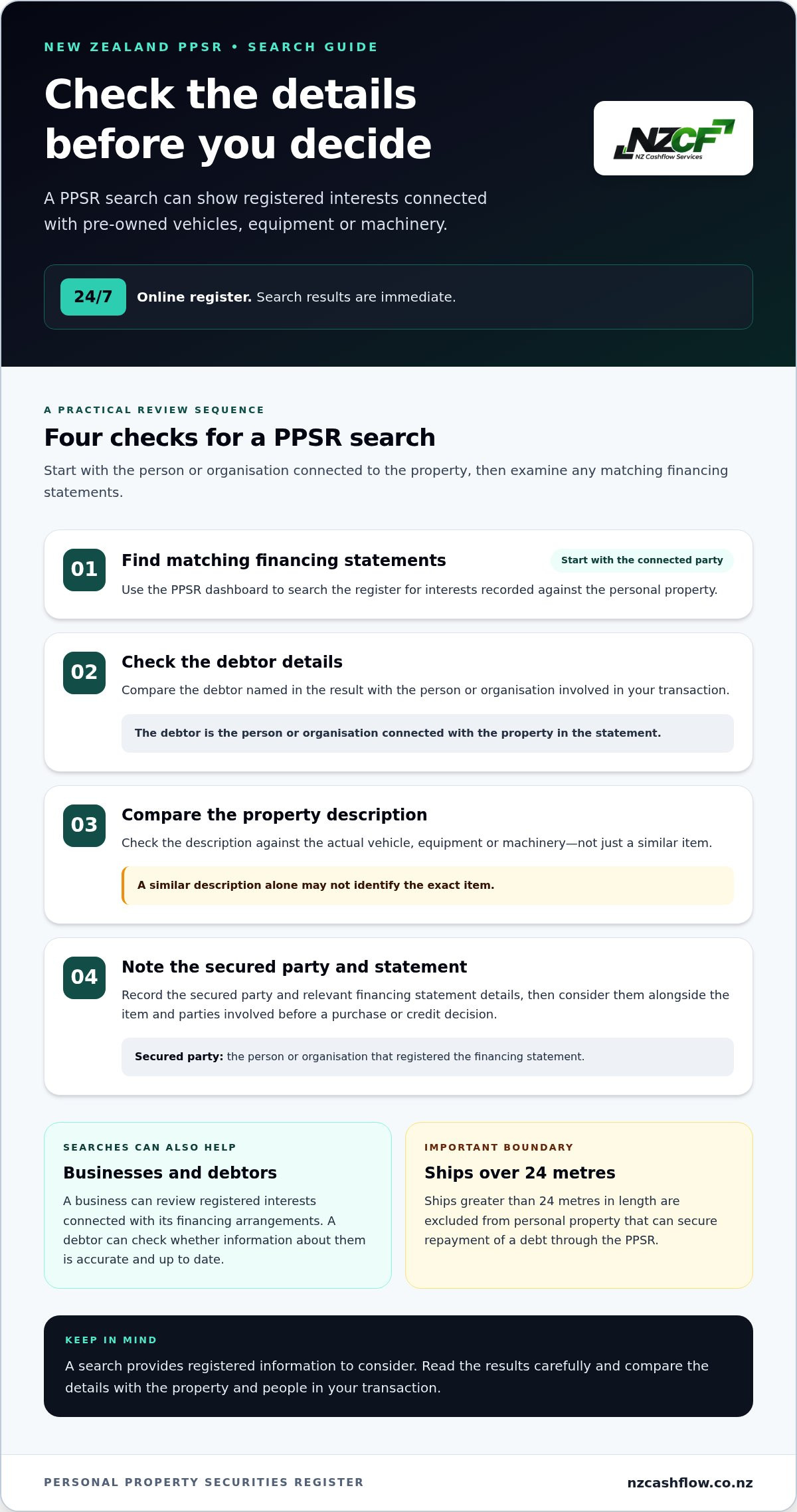
Use a PPSR search to look for security interests recorded against personal property. In New Zealand, searches can help buyers check whether money is owing on pre-owned vehicles, equipment or machinery. The PPSR is online 24/7, and search results are immediate. A result gives you registered information to consider before making a purchase or credit decision.
Start with the person or organisation connected to the property, then review any matching financing statements. Each statement records details about the property, debtor and secured party. The secured party is the person or organisation that registered it. Compare the statement with the item and parties involved in your transaction. A similar description alone may not identify the exact item.
Use the PPSR dashboard to search the register. Read the results carefully and note the details relevant to your decision.
- Check the debtor details against the person or organisation involved.
- Compare the property description with the vehicle, equipment or machinery.
- Note the secured party and financing statement details for follow-up.
- If you’re the debtor, use a search to review whether registered information about you is accurate and up to date.
A search is useful for more than a purchase. A business can review registered interests connected with its own financing arrangements, while a debtor can identify information that may need correction. Ships greater than 24 metres in length are excluded from personal property that can secure repayment of a debt through the PPSR, according to New Zealand Companies Office.
How long does a PPSR registration last, and how do I renew or discharge it? The registration period is set when the financing statement is registered. Renew it before the period ends to keep it active, or discharge it when the secured debt has been repaid.
What are the rules and deadlines for registering a security interest under New Zealand law? A security interest is established through a security agreement, such as one signed for a loan or hire purchase arrangement. Register promptly, because registration order can affect priority against creditors who register later. There is no specific deadline set out here.
How much does a New Zealand PPSR search or registration cost? The cost depends on whether you’re searching, registering, amending, renewing or discharging a financing statement. Request a quote for the relevant service.
How do I correct or remove an inaccurate PPSR registration in New Zealand? Search the register to identify the information, then request a correction to inaccurate details. When the debt has been repaid, the registration can be removed through a discharge.
Setting up an online services account
Set up an online services account before using New Zealand’s Personal Property Securities Register. A RealMe login is required to access a range of PPSR online services. The account lets you manage personal or organisation information used with those services.
First, identify who will use the account. If you’re acting for a business, keep its organisation details consistent with the records used for PPSR tasks. If you’re acting personally, use your own details. This distinction helps ensure you manage the right information after signing in.
Follow the online account process, then use your RealMe login to access PPSR services. The service you need depends on your task. For example, someone preparing to manage financing statements may need to update organisation details, while another user may only need to change contact information.
Once you have access, the account lets you update and manage personal and organisation information, including:
- Contact details, so PPSR correspondence reaches the right person.
- Payment details, which you can maintain for account-related use.
- Passwords, which you can update as part of managing account access.
- Organisation information, where you use the account for business activity.
Keep these details current. A change in business contact person, email address or payment details can make an old record less useful. Review the information when responsibilities change and update the relevant fields through the account. If the staff member managing PPSR administration leaves, for example, update account access and contact information to reflect the new arrangement.
Keep account access separate from the work your business needs to complete. The online services account is the entry point, but it doesn’t replace the information required for a specific PPSR task. Before acting, identify whether you’re searching, managing organisation information or working with a financing statement. This check helps align the account task with the business purpose.
If several people handle credit administration, agree who maintains the account details and who completes PPSR tasks. Keep relevant information together, and update changes through the account rather than relying on outdated contact or payment records. Clear responsibility makes routine administration easier to manage.
If you need practical support with PPSR administration after setting up access, explore PPSR registration support as a next step. An account gives you access to online services; accurate business information and a clear task help you use those services effectively.
Use the account controls to keep personal and organisation information current, including contact details, payment details and passwords, as your needs change.
What the PPSR is
New Zealand’s Personal Property Securities Register, or PPSR, records and displays information about security interests in personal property. Understanding a register entry helps you decide what to do before buying property. PPSR help in New Zealand often begins with knowing what the register can tell you.
Purpose of the PPSR
The PPSR is an online register for recording and searching security interests in personal property. A security interest is a creditor’s right to personal property, also called collateral, granted by a debtor. The register can help users check for information about security interests in personal property.
Keep the agreement and the register distinct. A security interest is established through a security agreement, such as one signed for credit provided through a loan or hire purchase arrangement. A financing statement can include relevant information about the property, debtor and secured party. For practical PPSR help in New Zealand, distinguish the register entry from the agreement behind it.
For example, a business providing credit against personal property can record details of its interest on the PPSR. Someone considering a purchase can search for registered interests. The register helps both parties see relevant information, but the agreement and financing statement serve different purposes.
Checking interests against property
What should I do if the PPSR shows a security interest against property I want to buy? Pause the purchase and compare the entry with the property and parties involved. Ask the seller to resolve the interest with the secured party, then search again to confirm the registration has been discharged before proceeding.
Read the financing statement carefully. Check whether the debtor details and property description match the sale. A registration against the seller may relate to the item, so understand the entry before deciding. For a vehicle, compare its identifying details with the property described in the statement rather than relying on a similar model name alone.
Ask the seller for an explanation and the secured party’s details. If money remains owing, agree how the seller will address the secured party’s interest. Once the debt has been repaid, the registration can be discharged. Search again after the seller arranges the discharge, so your decision reflects the updated register.
Treat a PPSR entry as information to investigate, not a reason to guess what the transaction means. Match the statement to the property, identify the secured party and resolve any uncertainty with the seller before committing. A debtor can also search to check whether information registered about them is accurate and current. If an entry is wrong, request a correction.
Why to use the PPSR
For a New Zealand business extending credit, the PPSR can help protect an interest in personal property. Registering a security interest can improve the secured party’s chances of recovering property if a customer defaults. It can also affect the order in which creditors have priority.
What are the risks and consequences of failing to register a security interest on the New Zealand PPSR? Without registration, a creditor misses the priority registration can provide over creditors who have not registered and those who register later. If a customer defaults, registration can improve the secured party’s chances of recovering the property.
Consider the PPSR whenever a transaction involves valuable personal property and credit. A business supplying equipment on credit, for example, should understand how its security agreement and register entry work together. Buyers of used vehicles, people leasing property, using hire purchase or taking out a loan should also understand the register’s role.
Registration supports a secured party’s position, but it doesn’t replace a clear agreement or accurate information. The financing statement records details about the property, debtor and secured party. Those details should reflect the arrangement. If the property description or debtor information is wrong, the entry may not clearly relate to the transaction.
Use the PPSR as part of a practical credit process:
- Identify the personal property connected with the credit arrangement.
- Review the security agreement and confirm the parties understand the arrangement.
- Register the security interest using accurate debtor, property and secured-party details.
- Search the register when considering a purchase or reviewing property linked to a transaction.
Registration timing matters because priority can depend on when an interest is registered. A registered interest can take priority over interests held by creditors who have not registered and those who register later. This matters if several creditors have claims connected with the same property. Creditors should consider registration order when setting up a secured transaction.
A search supports a different decision. Before buying pre-owned machinery, a business can search for registered interests and use the results to assess the purchase. A debtor can also check whether information registered about them is accurate and current. These checks support better-informed financial and purchasing decisions.
The PPSR is relevant when property, credit and recovery risk intersect. A lender, supplier offering credit or buyer considering valuable used goods can search the register for a clearer view of recorded interests. Treat registration and searching as distinct steps: registration records an interest, while a search helps assess what the register already shows.
What information and documents are needed to register a financing statement in New Zealand?
Prepare accurate details about the property, debtor and secured party before starting a financing statement. These are the three information areas the statement records. Gather the details from the transaction records and security agreement, then compare them before entering anything.
First, identify the property covered by the security interest. Use the description in the agreement and your business records. For equipment, match the description to the item being supplied or financed. For a vehicle, use its identifying details from the relevant records. A clear description helps connect the statement with the property involved.
Next, prepare the debtor’s details. The debtor is the person or organisation that grants the creditor a right to personal property. Check the agreement and related records to ensure the information matches the debtor involved. A mismatch between a person and a business, for example, can make it harder to identify which party the statement concerns.
Then identify the secured party, the person or organisation registering the financing statement. If you’re acting for an organisation, confirm which organisation the registration represents. The PPSR requires a secured party group before a financing statement can be registered. The group can include one or more individuals or organisations.
Keep the security agreement available while preparing the entry. A security interest is established through an agreement signed when credit is offered, such as a hire purchase arrangement or loan. The agreement helps identify the property and parties involved. It is useful reference material, but the financing statement records details about the property, debtor and secured party.
Before submitting, compare the proposed entry with the agreement and business records:
- Confirm the property description matches the item covered by the arrangement.
- Check the debtor’s details against the person or organisation granting the interest.
- Make sure the secured party details identify the correct individual or organisation.
- Review the secured party group so it represents the registering party.
For example, if a business supplies a machine under a hire purchase agreement, use that agreement to identify the debtor, secured party and machine. Don’t rely on an invoice alone if it doesn’t show how the security interest relates to the property. Keep the preparation records together so later amendments or reviews can be checked against the same transaction details.
Accurate preparation begins with matching each field to the underlying transaction. For help with preparing PPSR registration details, use support that can assist with PPSR registrations and related administration.
NZ Cashflow Services: PPSR
NZ Cashflow Services helps businesses register, amend, renew and discharge security interests on the PPSR. Use this support when you need to record an interest, update a financing statement or discharge it after repayment. Accurate details and timely updates help keep register information aligned with the underlying transaction.
PPSR administration also fits alongside practical credit processes. Terms of Trade can set out payment expectations, while Credit Management supports businesses managing customer credit. These services help connect security interests with the wider way your business extends and manages credit.
For help with PPSR administration or related credit processes, contact NZ Cashflow Services.
Make PPSR part of your credit process
Connect PPSR decisions with how your business sets terms and manages customer payments. Clear internal ownership helps keep credit administration consistent, especially when staff change or customer arrangements evolve. Decide who handles each task and how updates are recorded.
NZ Cashflow Services offers PPSR support alongside Get Paid and Terms of Trade services. This can help businesses manage register administration in the context of payment processes and customer agreements. For practical PPSR help in New Zealand, start with the task you need to complete and the business information involved.
Whether you’re preparing a registration or reviewing how credit is managed, choose a next step that fits your current process. Contact NZ Cashflow Services to discuss support for your business. A clear process starts with one practical decision, and you can take that step with confidence.
Frequently Asked Questions
What is the PPSR?
The PPSR is New Zealand’s online register for recording and searching security interests in personal property. A business can record an interest connected with credit, while buyers can search for registered interests before purchasing goods. For example, a business considering used machinery can search the register to inform its decision. The register shows recorded information; the security agreement sets out the credit arrangement.
What is the New Zealand Personal Property Securities Register (PPSR)?
The New Zealand Personal Property Securities Register is the national online register for security interests in personal property. It records information about property, debtors and secured parties. Personal property means property used as collateral for a debt, rather than land. A PPSR entry can help a business understand whether a creditor has recorded an interest in goods involved in a transaction.
How do I search the New Zealand PPSR for a vehicle or other personal property?
Use the PPSR online search service and enter the required details for the person or property involved. Review the results against the vehicle or goods you’re considering, including the relevant debtor and property information. If a business is buying a used van, include the search in its purchase checks and resolve any matching registration before completing the transaction.
How do I register a security interest on the New Zealand PPSR?
Set up an online services account and use a RealMe login to access relevant PPSR services. Before filing, create a secured party group for the individual or organisation registering the interest. Prepare the security agreement and details about the property, debtor and secured party. Check everything against the transaction, then submit the financing statement through the register.
How can I check whether a used car has money owing or a registered security interest in New Zealand?
Search the PPSR before committing to buy the car. Use the available vehicle and debtor details to find relevant registered information, then compare the results with the car and seller. If an entry appears to match, ask the seller to resolve it with the secured party. Search again after any discharge, before deciding whether to proceed.


